
“Ideas are cheap. Execution is everything”. So goes the popular phrase. And, in 2026, women are turning their ideas and passions into new businesses at an unprecedented rate. According to the latest report from Global Entrepreneurship Monitor (GEM), female founder activity in the UK has tripled, rising from 3.5% in 2002 to 10% today.
In celebration of International Women’s Day, we speak to three women about how they made their dreams a reality, and how other women can do it too.
Focus on the first step
Starting a business can feel like an overwhelming challenge. By breaking each step down into specific tasks, you can start making progress and ditch the overwhelm.
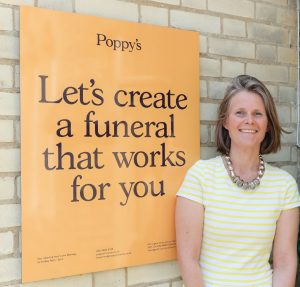
“The trick is not thinking too far ahead,” says Wandsworth-based Poppy Mardall, founder and chair of Poppy’s Funerals. “Stop trying to imagine the future. Just deal with the moment in front of you.
“I had a strong sense that funeral care could be so much better,” she continues. “I imagined outstanding service for grieving people and gentle care for the dead. But I had no background in the sector. I knew if I thought about it in too much detail, I would talk myself out of doing it. So I became really intentional about not overthinking it. It was very much one foot in front of the other, facing each hurdle as it came. I was ready along the way to hit a hurdle that proved it wasn’t meant to be. That hurdle never came.”
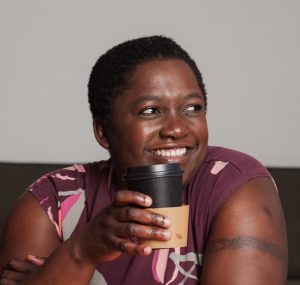
Try and take steps that force you to interact with potential customers, advises Ayo Abbas, founder of Wandsworth-based agency Abbas Marketing. “One of the first proper things I did was build my own website on Squarespace. That made it all feel very real,” she says.
For London-based Dr Megan Rossi, the serial founder behind gut health specialist The Gut Health Doctor, live bacteria supplement brand SMART STRAINS, and gut health food brand, Bio&Me, it was a commitment to small but consistent actions that proved the winning formula.

“I made a commitment to myself that every single month I would find a new contact – often via LinkedIn – and reach out,” she says. “Even if it was just one conversation or exploratory call, I kept moving forward. That steady, disciplined approach compounded over time. It wasn’t dramatic or glamorous. It was slow and methodical. But that commitment to monthly action ultimately led me to the right partner.
Ambition takes different forms
Not every entrepreneur is focused on world domination, and that’s okay, says Dr Rossi. “I’ve never seen myself as ambitious in the traditional sense,” she explains. “I’ve never set out to ‘take over the world’. What drives me is spotting a gap and wanting to fix it. As a researcher and clinician, you’re trained to follow the evidence and improve outcomes. And when I see something that could be done better, especially when it impacts people’s health, that’s what fuels me.”
This view is echoed by Mardall and Abbas, who have both previously struggled with the concept of ambition as someone motivated by self-interest or willing to succeed at the expense of others.
“I am quite ambitious, but probably not in the traditional sense,” Abbas explains. I’m ambitious about doing really good work with amazing companies. I want to help them get to the top of their sector and I’d like to be seen as a thought leader in my industry. That matters to me. But I’m not obsessed with growing a huge agency and scaling for the sake of it. I’m more ambitious about the quality of what I do and how far I can push myself and am happy being a company of one.”
Mardall adds: “I want Poppy’s to grow sustainably. I want our clients, team mates and the planet all well cared for along the way. Ambition can be a loaded word, but for me it means sustaining a great sense of what is possible and that has been invaluable through the twists and turns of growing a business from scratch.”
The ambition to make small incremental improvements over time can be just as impactful – if not more so – than trying to take over the world from day one, adds Dr Rossi. “My ambition isn’t about scale for the sake of scale. It’s about impact. It’s about doing things properly and making meaningful change.”
Don’t give in to doubt
Although female business owners have big growth ambitions, over a third (37%) of women who run their own business say that feelings of self-doubt are preventing them from growing their businesses, according to recent research from HSBC UK.
Abbas agrees with these findings:” I think women often feel like they need more proof, experience and qualifications before they start to win work.” She admits that self-doubt held her back initially: “The hesitation was mainly confidence. Could I actually do it? Would people hire me? Could I keep it going.”
This is where a little external validation comes in handy, says Mardall. “A pivotal moment came when I articulated my vision to people I really, really trusted,” she says. “Maybe five of my best people. Saying it out loud and then seeing that they thought I might be onto something important. Having the faith of a few good people really helped unleash my fire.”
Abbas says there is never a “right” time to start a business, and that the key to getting started is all about mindset. “There’s no point waiting until you feel completely ready as at some point you just have to back yourself and get on with it.”
The GEM also found that women were more likely to be dissuaded from starting businesses during times of economic uncertainty than men. Abbas started her business a month before the first Covid lockdown. “This was somewhat bad timing as I had planned to do lots of in-person networking to grow my business,” she says. “But I’m a marketer and I enjoy digital marketing, so it then made sense to use myself as my best ‘case study’ to show how I could market my own business. My website and LinkedIn became my own ‘shop window’. It wasn’t just about marketing my business, it was about showing what I could actually do.”
Get comfortable hearing the word, ‘no’
“Don’t take rejection personally,” advises Dr Rossi, who says that she was rejected 11 times when building SMART STRAINS. “There were tears. There were moments of real doubt. But every rejection redirected me towards something better. In hindsight, those early setbacks were almost a training ground for entrepreneurship.”
Only 1% of venture funding in the UK goes to female-founded businesses, so we know that women are hearing a lot of ‘no’s – potentially many more than their male counterparts.
Every ‘no’ brings you one step closer to a ‘yes’, says Dr Rossi. “When you start a business, things go wrong constantly. Resilience isn’t optional; it’s essential. So I’d say, see rejection as preparation. It’s not a signal to stop. It’s a test of whether you’re willing to keep going.”
This means you need to seize opportunities as and when they arise, advises Abbas. The consultant, who was recognised as the runner-up for Entrepreneur of the Year at the 2023 Wandsworth Women’s Enterprise Awards, says she always wanted to have her own business but it was never the right time. “And then I was made redundant, and I was looking at permanent jobs thinking, ‘I don’t really want any of these’,” she says. “So in a way my hand was forced. It became a bit of a now or never moment. I didn’t suddenly feel fearless – I just decided to go for it.”
If you hear a lot of ‘no’s, and feel that progress is slowing, give yourself permission to take a break, adds Mardall. “If you’re in a rut, try and stop thinking about it for a bit. Go to bed, get some sleep, eat some food. Get yourself back into a position of being able to think clearly.”